
The Urban Age in Question
The Urban Age in Question
Neil Brenner, Harvard University
Neil Brenner is Professor of Urban Theory at the Harvard Graduate School of Design (GSD) and the coordinator of the newly founded Urban Theory Lab GSD. Brenner’s writing and teaching focus on the theoretical, conceptual and methodological dimensions of urban questions. His work builds upon, and seeks to extend, the fields of critical urban and regional studies, comparative geopolitical economy and radical sociospatial theory. Major research foci include processes of urban and regional restructuring and uneven spatial development; the generalization of capitalist urbanization; and processes of state spatial restructuring, with particular reference to the remaking of urban, metropolitan and regional governance configurations under contemporary neoliberalizing capitalism.
Brenner is the author of New State Spaces: Urban Governance and the Rescaling of Statehood (Oxford University Press, 2004). Other book-length publications include Cities for People, not for Profits: Critical Urban Theory and the Right to the City (co-edited with Peter Marcuse and Margit Mayer; Routledge 2011); Henri Lefebvre, State, Space, World (co-edited with Stuart Elden, co-translated with Gerald Moore and Stuart Elden, University of Minnesota Press, 2009); The Global Cities Reader (co-edited with Roger Keil; Routledge, 2006); Spaces of Neoliberalism: Urban Restructuring in North America and Western Europe(co-edited with Nik Theodore; Blackwell, 2003); and State/Space: A Reader (co-edited with Bob Jessop, Martin Jones and Gordon MacLeod; Blackwell, 2002). Several scholarly articles and essays have been translated into other languages, including Chinese, Finnish, German, Italian, Japanese, Portuguese, Spanish and Turkish.
Major current research and writing projects focus on:
Planetary urbanization
New conceptual and methodological challenges for 21st century critical urban theory
The future of ‘comparative’ urban studies
Neoliberalization: geographies, modalities and pathways
The evolution of urban, metropolitan and regional governance in geohistorical and comparative perspective
The rescaling of state space in geohistorical and comparative perspective
Henri Lefebvre on space, politics and urbanization
Brenner serves on the editorial board of the Studies in Urban and Social Change (SUSC) book series, affiliated with the International Journal of Urban and Regional Research and published by Blackwell-Wiley (Chief Editor, 2005-2009). He also serves on the editorial boards of several scholarly journals, includingInternational Journal of Urban and Regional Research, CITY, Urban Studies, European Journal of Urban and Regional Studies, Geopolitics and Cambridge Journal of Regions, Economies and Societies. He has served as a visiting professor or lecturer in several European universities, including the University of Amsterdam (Wibaut Chair of Urban Studies), the University of Bristol (Benjamin Meaker Visiting Professorship), the National University of Ireland/Maynooth and the University of Urbino (EUREX summer school in urban studies)
Date:
-
Location:
Lexmark Room, Main Building
Event Series:
"UK at the Half" Features the Director of the UK Confucius Institute
Huajing Maske, director of the University of Kentucky Confucius Institute, was the guest on Saturday's "UK at the Half," which aired during the UK vs. LSU game that was broadcast on radio.
Differentiated object marking in North Russian, Uzbek and Spanish
Date:
-
Location:
Niles Gallery
Event Series:
Conflicting Realms of Russia: "Putin was Sent to Russia by God" vs. P****-Riot
Date:
-
Location:
Young Library Auditorium
Event Series:
English in Russia: From a Language of Elite to a Language of the Masses
Date:
-
Location:
Student Center 211
Event Series:
Education Abroad Offers Range of Scholarship Opportunities
Widely seen as a life-changing experience, education abroad has been perceived as one with added financial burden. However, Education Abroad at UK is seeking to dispel the myth that money is necessarily an obstacle; rather, they want students to know money does not have to be a barrier.
Derek Gregory, University of British Columbia: “Gabriel's War: Cartography and the Changing Art of War "
Derek Gregory, University of British Columbia: “Gabriel's War: Cartography and the Changing Art of War"
January 25, 2pm
Lexmark Room, Main Building
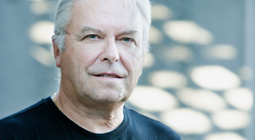 Dr. Derek Gregory is a member of the Department of Geography and one of two Peter Wall Distinguished Professors at the Peter Wall Institute for Advanced Studies at the University of British Columbia in Vancouver, Canada. Dr. Gregory trained as an historical geographer at the University of Cambridge. His research focused on the historical geography of industrialization and on the relations between social theory and human geography and explored a range of critical theories that showed how place, space, and landscape have been involved in the operation and outcome of social processes. His 1982 book, Regional Transformation and Industrial Revolution, was staged on the classic ground of E.P. Thompson’s Making of the English Working Class. Following a move to Vancouver in 1989, Gregory’s work was reinforced by postcolonial critique, outlined in his 1989 book Geographical Imaginations. This new phase of work owed much to Edward Said’s critique of Orientalism, but it was much more concerned with the corporeality and physicality of travel – with embodied subjects moving through material landscapes – and with the constantly changing (often mislaid) cultural baggage of the travelers. And it paid attention what travelers mapped, sketched, and photographed – and to the consequences these representations had for their encounters.
This work on travel and travel writing was interrupted by the terrorist attacks on the World Trade Center and the Pentagon on 11 September 2001, and the focus of his research shifted to the present. Drawing on his training as an historical geographer and his sense of the renewed power of Orientalism, Dr. Gregory traced the long history of British and American involvements in the “Middle East,” and showed how these affected the cultural, political, and military responses to 9/11. The Colonial Present: Afghanistan, Palestine, Iraq (2004) showed how war quite literally takes place, and described in detail the violent ‘taking of places’ not only in Afghanistan and Iraq but in occupied Palestine. The study showed how the conduct of war connects the abstractions of geopolitics – the pronouncements of politicians, the strategies of generals – to the lives and deaths of countless ordinary men and women.
His forthcoming book, The Everywhere War, shows how the conduct of war is shaped by the spaces through which it is conducted; ranging from the global war prison at Guantanamo Bay through counterinsurgency in Baghdad and the drone wars in Afghanistan/Pakistan. His new research project, Killing space, is a critical study of the techno-cultural and political dimensions of air war. It focuses on three major campaigns: the combined bombing offensive against Germany in the Second World War, America’s air wars over Indochina, and the present use of UAVs in Afghanistan/Pakistan, Somalia, Yemen, and elsewhere. It pays particular attention to the changing ways in which cities (and eventually people) have been visualized as targets within what is now called the ‘kill-chain,’ and to the different ways in which the media have represented and reported bombing to different publics.
Date:
-
Location:
Lexmark Room, Main Building
The Sonority Hierarchy & the Importance of Morphology in the Syllabification of Indo-European
Date:
Wednesday, January 30, 2013 - 1:00pm to 2:00pm
Location:
Niles Gallery, Fine Arts Library
Maria Polinsky, Harvard University
“The Sonority Hierarchy & the Importance of Morphology in the Syllabification of Indo-European”
Venue: Niles Gallery, Fine Arts Library
Date:
-
Location:
Niles Gallery
Event Series:
Second Language Shows Benefits to Aging Brain
As people age, cognitive flexibility — the ability to adapt to unfamiliar or unexpected circumstances — and related "executive" functions decline. Recent studies suggest lifelong bilingualism may reduce this decline — a boost that may stem from the experience of constantly switching between languages. However, how brain activity differs between older bilinguals and monolinguals was previously unclear.