
'Dead' Language Resurrected at UK
When in Lexington, do as the Romans do — at least if you're attending the Conventiculum Latinum Lexintoniense, a week-long conference where participants from all over the world are immersed in the Latin language.
When in Lexington, do as the Romans do — at least if you're attending the Conventiculum Latinum Lexintoniense, a week-long conference where participants from all over the world are immersed in the Latin language.
In his talk, Sabar will weave the remarkable story of the Kurdish Jews and their dying Aramaic tongue with the moving tale of how a consumate Californai kid came to write a book about his family's past in Iraqi Kurdistan. The book, "My Father's Paradise: A Son's Search for his Jewish Past in Kurdish Iraq," won the National Book Critics Circle Award for Autobiography, one of the highest honors in American letters.
Sponsored by the Jewish Studies Program
Sponsored by Jewish Studies Program and the Department of History
“Political Islam, the Muslim Brotherhood and Egyptian Politics”
7:00 pm W.T. Young Auditorium
Associate Professor of Islamic Law, University of Toronto, Faculty of Law
Scholar of Islamic Law and Islamist/Reformist Thought
Author of the book: Muslim Reformists, Female Citizenship and the Public Accommodation of Islam in Liberal Democracy
Articles: “Islamic Politics and Secular Politics: Can They Co-Exist” and “Judicial Institutions, the Legitimacy of the Islamic State Law and Democratic Transition in Egypt”

This lecture will examine American efforts to further a "peace process" that has in fact exacerbated the conflict, and will explore how the US could contribute to a just resolution of the Palestine issue.
Rashid Khalidi is the Edward Said Professor of Arab Studies and chair of the Department of History at Columbia University. He received a B.A. from Yale University in 1970 and a D. Phil. from Oxford University in 1974, and has taught at the Lebanese University, the American University of Beirut, Georgetown University, and at the University of Chicago. He is past President of the Middle East Studies Asociation, was an advisor to the Palestinian delegation to the 1991-1993 Arab-Israeli peace negotiations, and is editor of the Journal of Palestine Studies.
Khalidi is the author of seven books: Brokers of Deceit: How the U.S. has Undermined Peace in the Middle East; Sowing Crisis: American Dominance and the Cold War in the Middle East; The Iron Cage: The Story of the Palestinian Struggle for Statehood; Resurrecting Empire: Western Footprints and America’s Perilous Path in the Middle East; Palestinian Identity: The Construction of Modern National Consciousness; Under Siege: PLO Decision-making during the 1982 War; and British Policy towards Syria and Palestine, 1906-1914.
Since 1999 hundreds of thousands of young North American Jews have visited Israel on an all-expense-paid 10-day pilgrimage-tour known as Birthright Israel. The most elaborate of the state-supported homeland tours that are cropping up all over the world, this half-billion-dollar venture seeks to deepen the ties binding the Jewish Diaspora to Israel. But unlike Jewish pilgrimages of millennia past, Birthright Israel adopts and adapts the practices of modern mass tourism. What happens when a state looks to tourism to create a new pilgrimage ritual for the 21st century? How does the act of touring shape identity? How do the organizers of Birthright seek to turn the identity-shaping potentials of tourism to the service of building Jewish identity, and how are their efforts complicated by inherent aspects of tourism itself?
Shaul Kelner is Associate Professor of Sociology and Jewish Studies at Vanderbilt University and Director of Vanderbilt's Program in Jewish Studies. He studies the cultural politics of American Jewish identity.
Prof. Kelner has been a Fellow of the Hebrew University of Jerusalem's Institute for Advanced Studies, and a visiting scholar at Tel Aviv University. He is the author of Tours That Bind: Diaspora, Pilgrimage and Israeli Birthright Tourism (NYU Press, 2010), which received awards from the Association for Jewish Studies and American Sociological Association.
This lecture will examine the historical foundations of U.S. relations with and approaches to Iraq that influence the dynamics of the current events and crises in that country and its region.
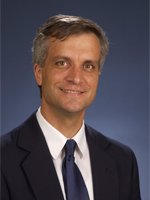
As a research scholar, Professor Hahn specializes in U.S. foreign relations in the Middle East since 1940. His publications include Missions Accomplished?: The United States and Iraq since World War I (Oxford University Press, 2011); Historical Dictionary of U.S.-Middle East Relations (Rowman and Littlefield, 2007); Crisis and Crossfire: The United States and the Middle East since 1945 (Potomac Books, 2005); Caught in the Middle East: U.S. Policy Toward the Arab-Israeli Conflict, 1945-1961 (University of North Carolina Press, 2004); Empire and Revolution: The United States and the Third World Since 1945 (co-edited with Mary Ann Heiss, Ohio State University Press, 2001); and The United States, Great Britain, and Egypt, 1945-1956: Strategy and Diplomacy in the Early Cold War (University of North Carolina Press, 1991).
Professor Hahn’s research has been supported by the J. William Fulbright Foreign Scholarship Board, the National Endowment for the Humanities, the Truman Library Institute, the John F. Kennedy Library, the Lyndon Johnson Foundation, the Eisenhower World Affairs Institute, the Office of United States Air Force History, and the U.S. Army Center of Military History. He has lectured across the United States and in Canada, Britain, France, Switzerland, Norway, Germany, Austria, Russia, and Israel.
Professor Hahn is committed to undergraduate and graduate instruction. In collaboration with Ohio State colleagues, he has advised or co-advised more than two dozen doctoral dissertations in U.S. foreign relations history and has helped to launch new undergraduate study abroad programs on World War II and its impact on the modern world.
Since 2002, Professor Hahn has served as Executive Director of the Society for Historians of American Foreign Relations, a professional society of some 1,600 members in four dozen countries. In 2010, Governor Ted Strickland appointed Professor Hahn to a five-year term on the State of Ohio’s War of 1812 Bicentennial Commission. Professor Hahn served as associate editor of Diplomatic History in 1991-2002.
Andrew Maske, D.Phil, Associate Professor of Art History.